광복절
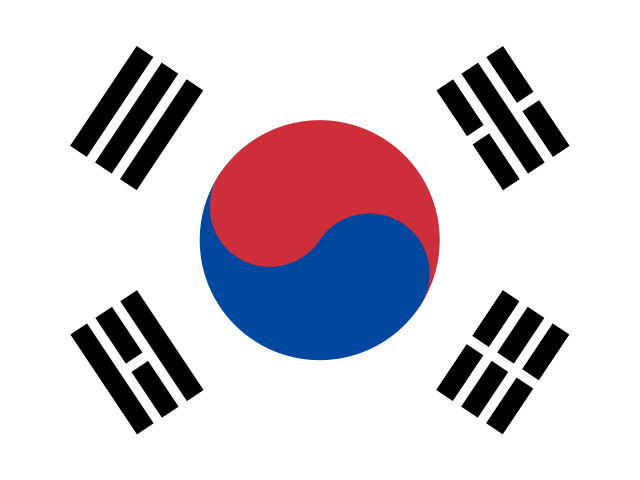
오늘은 광복절입니다.
Today is Liberation Day.
A South Korean national holiday commemorating the liberation of Korea from Japanese colonial rule on August 15, 1945.
광복절에는 많은 사람들이 독립운동가들을 기립니다.
On Liberation Day, many people honor independence activists.
The term combines '광복' (restoration of light/liberation) and '절' (day/festival).
Pro Tip
Cultural Context
This holiday marks Korea's independence from Japan, not the end of World War II. It's distinct from North Korea's 'Chogukhaebangui Nal' (August 15 Liberation Day), though both share the same date.
Gold Rule
Historical Significance
The date refers to the announcement of Korea's liberation by Emperor Hirohito on August 15, 1945 (Japan Standard Time), though actual liberation occurred gradually after Japan's surrender on September 2, 1945.
Word Origin
Compound of '광복' (gwangbok, 'restoration of light/liberation') + '절' (jeol, 'day/festival'). '광복' derives from classical Sino-Korean '光復' (restoration of light), symbolizing Korea's regained sovereignty after Japanese occupation (1910–1945). First officially observed in 1946.
Usage Notes
Celebrated annually on August 15 with national ceremonies, fireworks, and cultural events. Flags are displayed nationwide, and many Koreans visit independence-related sites or participate in memorial services.