母亲节
明天是母亲节,我要给妈妈买束花。
Tomorrow is Mother's Day; I'm going to buy my mom a bouquet of flowers.
An annual holiday celebrating mothers and motherhood, typically involving gift-giving and family gatherings.
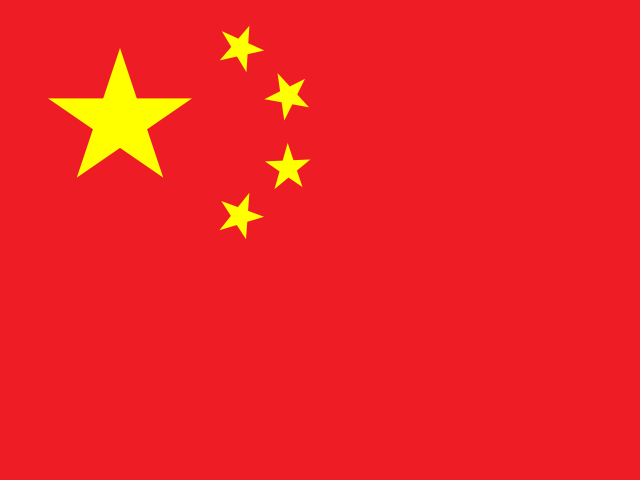
每年五月的第二个星期日是中国的母亲节。
The second Sunday of May is Mother's Day in China.
In China, Mother's Day is observed on the second Sunday of May, similar to many Western countries.
Related Phrases
Pro Tip
Cultural Context
In China, Mother's Day is not a public holiday but is widely recognized in urban areas. Gifts like carnations (康乃馨, kāngnǎixīn) are traditional, symbolizing love and respect.
Gold Rule
Word Order in Chinese Holidays
Chinese holiday names typically follow the pattern '[Honoree] + 节' (e.g., '教师节' for Teacher's Day). The honoree is usually a person or group, not an abstract concept.
Word Origin
The term '母亲节' is a direct compound of '母亲' (mǔqīn, mother) and '节' (jié, festival/day). It follows the Chinese tradition of naming holidays by combining the honoree with '节' (e.g., '儿童节' for Children's Day). The holiday was influenced by Western Mother's Day traditions in the early 20th century.
Usage Notes
In Chinese culture, Mother's Day is less commercialized than in Western countries but is still widely observed with family visits, phone calls, or small gifts. The day emphasizes filial piety (孝道, xiàodào), a core Confucian value.