Chủ quyền
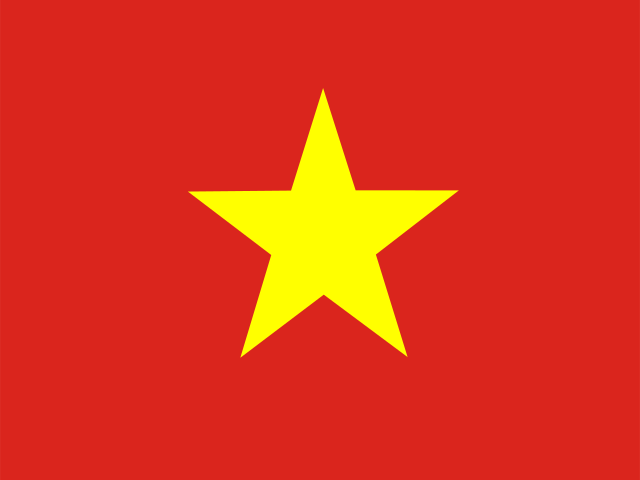
“Chủ quyền quốc gia là nền tảng của nền độc lập.”
“National sovereignty is the foundation of independence.”
The supreme and exclusive authority of a state over its territory, population, and government, free from external control.
Chủ quyền của một quốc gia bao gồm quyền lập pháp, quyền hành pháp và quyền tư pháp.
A country's sovereignty includes legislative, executive, and judicial powers.
This concept is fundamental in international law and political science.
The right of a people to govern themselves without external interference.
Các dân tộc thiểu số cũng có quyền chủ quyền trong một liên bang.
Minority peoples also have the right to sovereignty within a federation.
Often discussed in the context of self-determination and decolonization.
Collocations
Antonyms
Related Phrases
💡Pro Tip
Political Context
In Vietnamese political discourse, 'chủ quyền' is often associated with national independence and resistance to foreign domination.
⚡Gold Rule
Legal Usage
In legal contexts, 'chủ quyền' refers to the supreme authority of a state over its territory and population, as recognized in international law.
📖Word Origin
From 'chủ' (master) + 'quyền' (right/power), reflecting the idea of supreme authority.
📝Usage Notes
In Vietnamese, 'chủ quyền' is often used in formal and political contexts, particularly in discussions about national independence and international relations.